Fishing in Skåbu
- Home
- Reasons to visit Skåbu
Fishing
Fishing has always been part of life in Skåbu
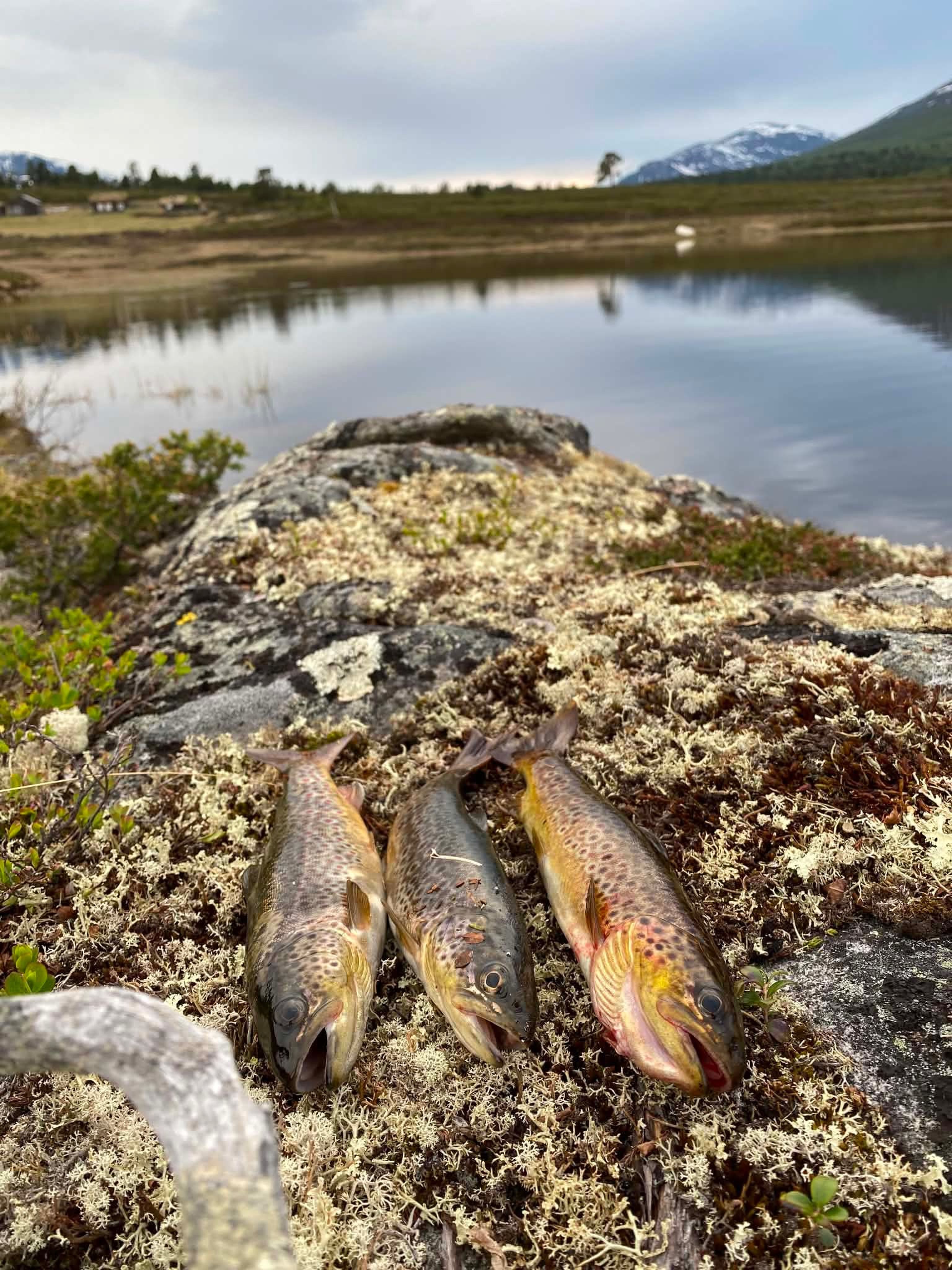
In Skåbu, fish has always been about more than just putting food on the table. It has been a part of life for generations. Once the hay was stored in the barn and the mountain evenings were long, a rod, a boat and good fishing spots were a natural part of everyday life.
Skåbu is located around 870 metres above sea level and is considered Norway's highest year-round village. The cool mountain climate provides good conditions for mountain fish, which often grow slowly and gain firm, tasty flesh.
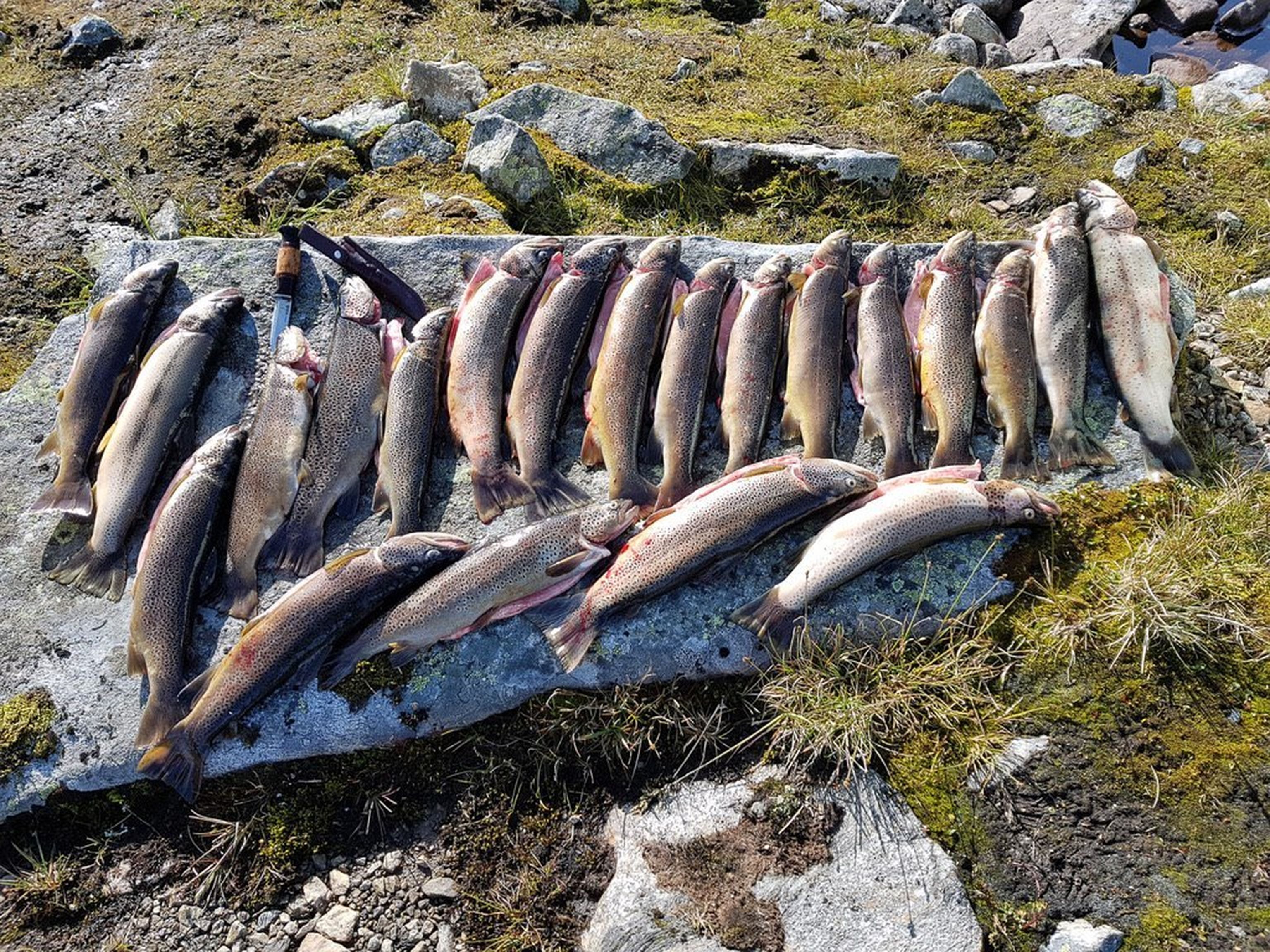
The area around Skåbu has hundreds of fishing lakes. Many of them are so remote that you can experience having an entire mountain lake to yourself.
Fish was the mountain farmer's most important resource
In the past, fish was an important addition to the diet of mountain farmers. Fishing was not only a form of recreation, but a necessary resource throughout the summer and autumn months. Fish was an important source of nutrition throughout the winter, and many methods were used to preserve the nutritious ingredient - such as drying, salting, smoking and using winter as "nature's freezer".
Surplus fish could also be traded and sold for other goods.
In many mountain villages, dried fish was brough along to eat at the mountain farm, in the forest or on long working days. It was easy to transport, durable and nutritious – in many ways the energy bar of the period. It could just as well be a snack for young people today.
When you sit there by a calm lake, in the silence of the surrounding mountains, it's nice to think a little about the importance fishing has had through generations and how each fish that was pulled up from the water represented not only today's dinner, but also security for the months to come. Perhaps that is precisely why fishing has had such an important place in the history of the mountain villages – it was about taking care of nature's gifts, and of each other.